Historic Tax Credits
$14.8 Million
Federal & State HTCs
New Markets Tax Credits
$8 Million

Total Project Cost
$64.5 Million

Project Partner
The Apollo Theater Foundation, Inc.

Impact
Arts Education, Support & Access
History
A Historic Nightlife Destination is Born
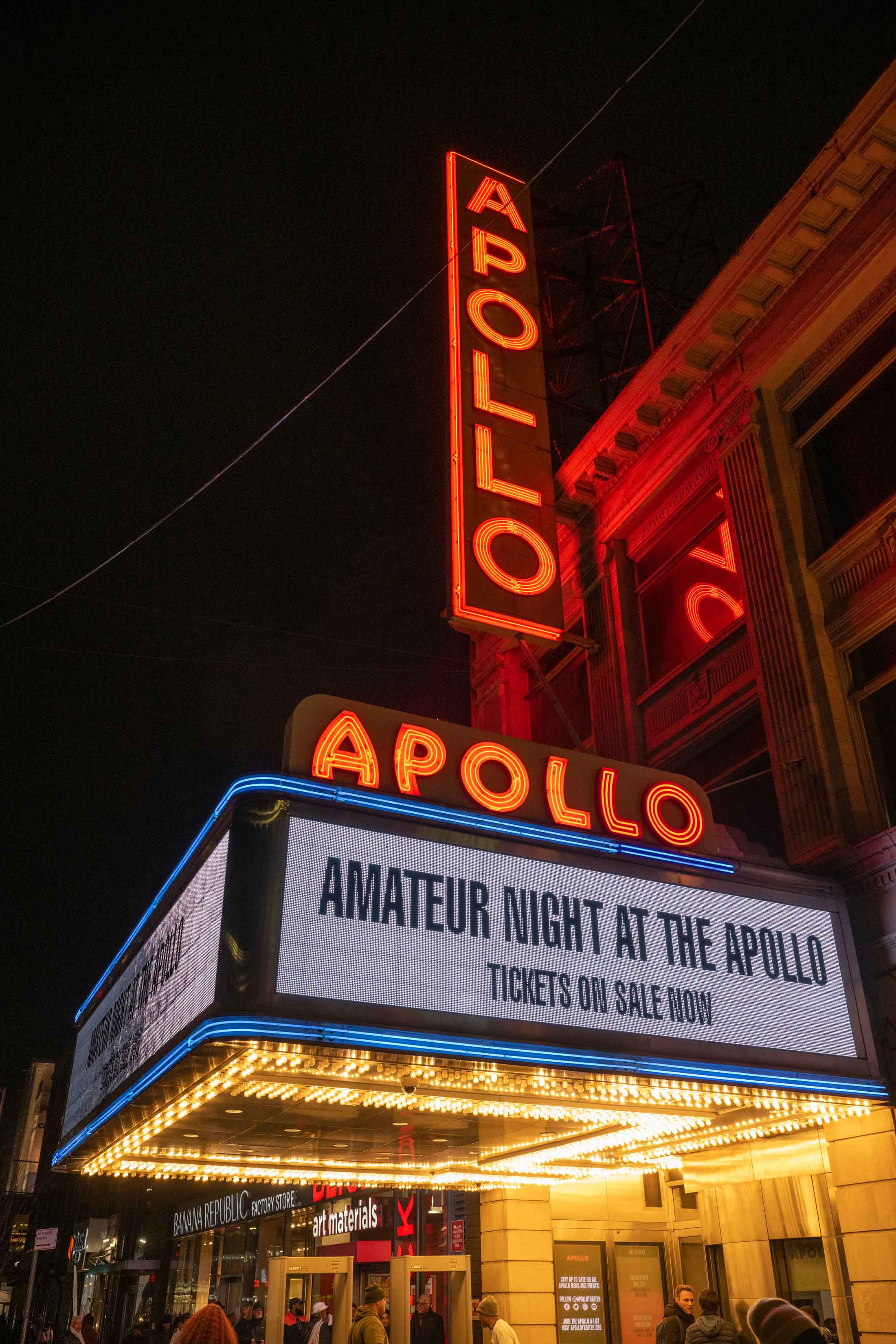
 The Apollo Theater opened in 1914 as Hurtig & Seamon’s New Burlesque Theater and was renamed the Apollo in 1934, branding itself as “America’s Finest Colored Theatre.” It became a cultural hub during Harlem’s shift to 125th Street and survived the Great Depression by merging with the Harlem Opera House. Its 1,700-seat capacity and central location made it a key nightlife destination, drawing up to a million attendees annually. The Apollo helped shape the trajectory of American music and popular culture, launching the careers of legendary artists and pioneering new genres.
Amateur Night helped discover stars like Sarah Vaughan, James Brown, and the Jackson 5. The Apollo was also vital to the development of bebop and R&B. Performers often viewed its passionate audience, especially those located in the “buzzard’s roost” in the balcony, as the ultimate test.
The theater thrived during the R&B and soul eras but declined in the 1970s, closing in 1976. After several failed revivals, Percy Sutton’s Inner City Broadcasting renovated and reopened it in the 1980s. The state took over in 1991, creating the Apollo Theater Foundation. The theater stabilized financially in the 2000s, and a major renovation in 2006 modernized the facility. In 2024, the Kennedy Center honored the Apollo for its lasting impact on American culture.

Revitalization Efforts
A New Era Begins
With this restoration, the use of the property will not change. The historic theater will continue to be used for Apollo Program events, namely Amateur Night at the Apollo and year-round ‘Apollo Presents’ programming, as well as facility rental events, which include events promoted through third parties and corporate rentals. The soundstage will continue to be utilized primarily for Apollo-promoted events and intimate cabaret-style theatrical entertainment. Apollo Program events will continue to be priced affordably for the community, while facility rental prices for private events are projected to provide an increased revenue stream.
Community Impact
Expanding Access to a Cultural Icon
Through the Sponsor’s Apollo Theater Academy, young adult creatives have the opportunities to develop as thought leaders, skilled technicians, and purveyors of artistic change. The planned renovation of the Apollo Theater will amplify this mission and deepen community impact across Harlem and New York City.
Cultural programming will rise as annual performances grow by 10%, from 161 to 177, bringing more residents and visitors into the landmark venue.
School tours will welcome more than 1,343 students, 86% of whom will be from low-income households, introducing them to the Apollo’s 90+-year legacy.
Education and workforce pipelines will expand substantially. The Apollo Theater Academy will increase its capacity to 125 high school students annually, while the High School Internship Program will grow by 50%, serving 75 students across three cohorts each year.

Expanded Programming
Annual performances are projected to grow by 10%

Commitment to Community
“Half Off Harlem” discount keeps performances affordable for neighbors.

Internship Opportunity
The High School Internship Program will grow by 50%.

Job Creation
28 new jobs created, lifting employment to 196 full-time jobs.

Environmental Impact
Aim for LEED Silver certification to ensure sustainable growth.
NTCIC & Progress
Financing the Project
The $64.5 million renovation of the iconic Apollo Theater was supported in part by NTCIC through an equity investment in the $14.8 million in state and federal Historic Tax Credits generated by the project, as well as an $8 million New Markets Tax Credit allocation.
Additional project financing was provided by J.P. Morgan through a combination of $25 million in bridge debt financing, a $4.9 million NMTC allocation, and acted as the NMTC investor for the project. Octagon Finance supported project financing through a $9 million
Historic Tax Credit bridge loan, and the New York City Economic Development Corporation (NYCEDC) provided $23 in NMTC allocation.
Additional funding includes $20.7 million in grant commitments from organizations such as the NYC Department of Cultural Affairs, a $10 million grant from Empire State Development, and a $5 million grant from SiriusXM.


Who Worked On This
Preservation is a Team Sport
NTCIC’s in-house experts bring depth across finance and compliance:
- Kathleen Galvan – Acquisitions Manager: Sourced project, performed preliminary underwriting, negotiated terms, and paired with investor.
- Carolyn Tom – Project Manager: Underwrote and closed the project.
- Maggie Ramold – Asset Manager: Construction monitoring, quarterly and annual reporting through compliance period.
Connect with Us
Curious About How Historic Tax Credit Investments Drive Real Impact?
Kandi Jackson leads tax credit investment activities with deep expertise in project finance, equity structuring, and compliance. When you speak with Kandi, expect clarity, honesty, and a clear roadmap for how your next investment can work in your portfolio.

Check Out Similar Projects Here
Browse all projects
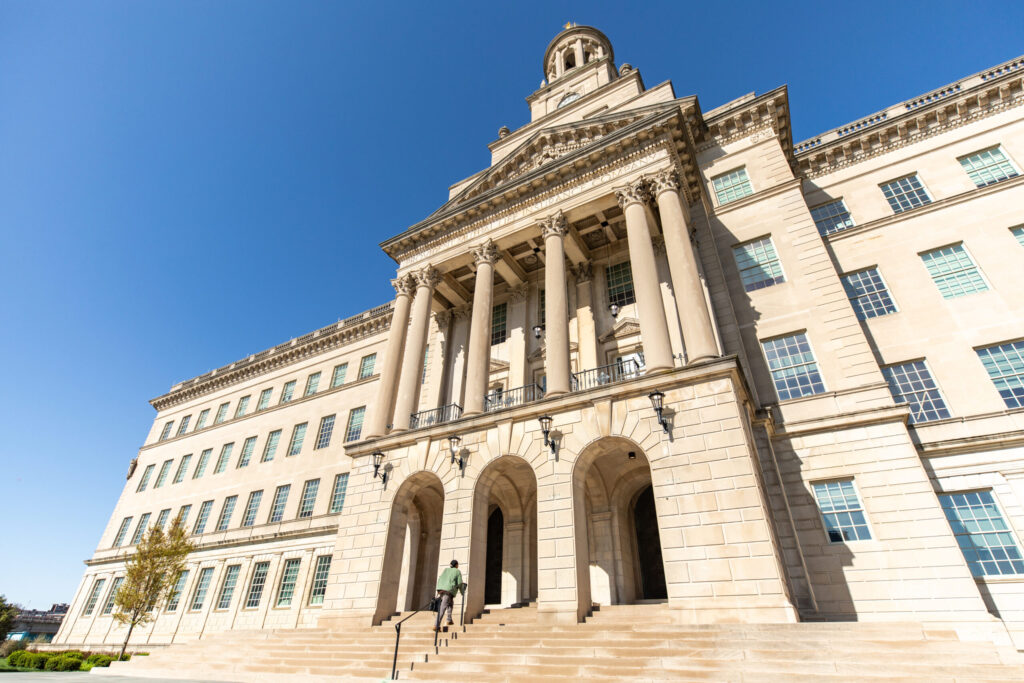
Liberty Theater North Bend, OR
Civil Rights Landmark Gets New Life as a Cultural Beacon
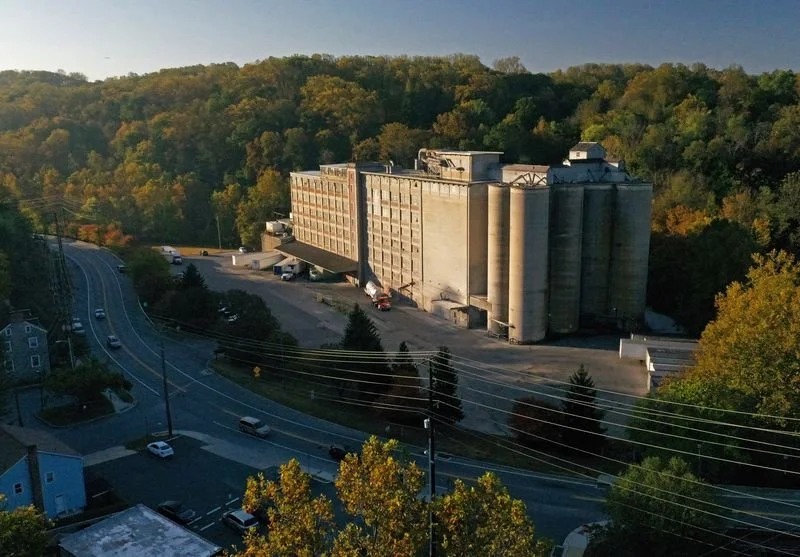
Ellicott Mill | Ellicott City, Maryland
Former school becomes affordable homes and a community anchor
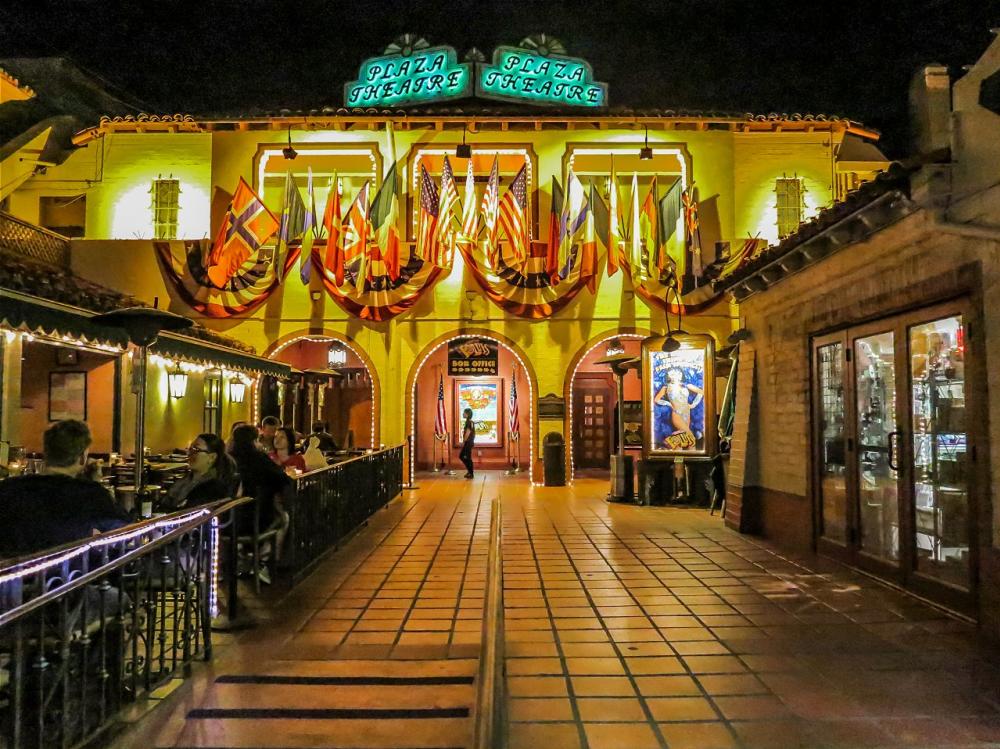
Fells Point Baltimore, MD
Heritage Reborn on the Baltimore Waterfront
Liberty Theater North Bend, OR
Civil Rights Landmark Gets New Life as a Cultural Beacon
Ellicott Mill | Ellicott City, Maryland
Former school becomes affordable homes and a community anchor
Fells Point Baltimore, MD
Heritage Reborn on the Baltimore Waterfront
Want to Discuss Your Next Project? Talk With Our Team Today.
We bring clear insight, deep experience, and strategic focus to every project—whether you're structuring complex capital or shaping long-term, legacy-driven development.